
Hacks
Side Hustle Tax-Free Allowance Increasing to £3,000 in 2027
☰What’s in this guide9 sectionsShowHide
- 1What's Changing With the £3,000 Side Hustle Allowance?
- 2When Does the £3,000 Allowance Start?
- 3Do You Pay Tax on Referral Bonuses?
- 4Do You Pay Tax on Bank Switching Bonuses?
- 5What About Cashback, Free Money Offers and Sign-Up Bonuses?
- 6What Happens If You Earn More Than £3,000?
- 7Why Is the Government Increasing the Allowance?
- 8What Does This Mean for My Side Gig Readers?
- 9Final Thoughts
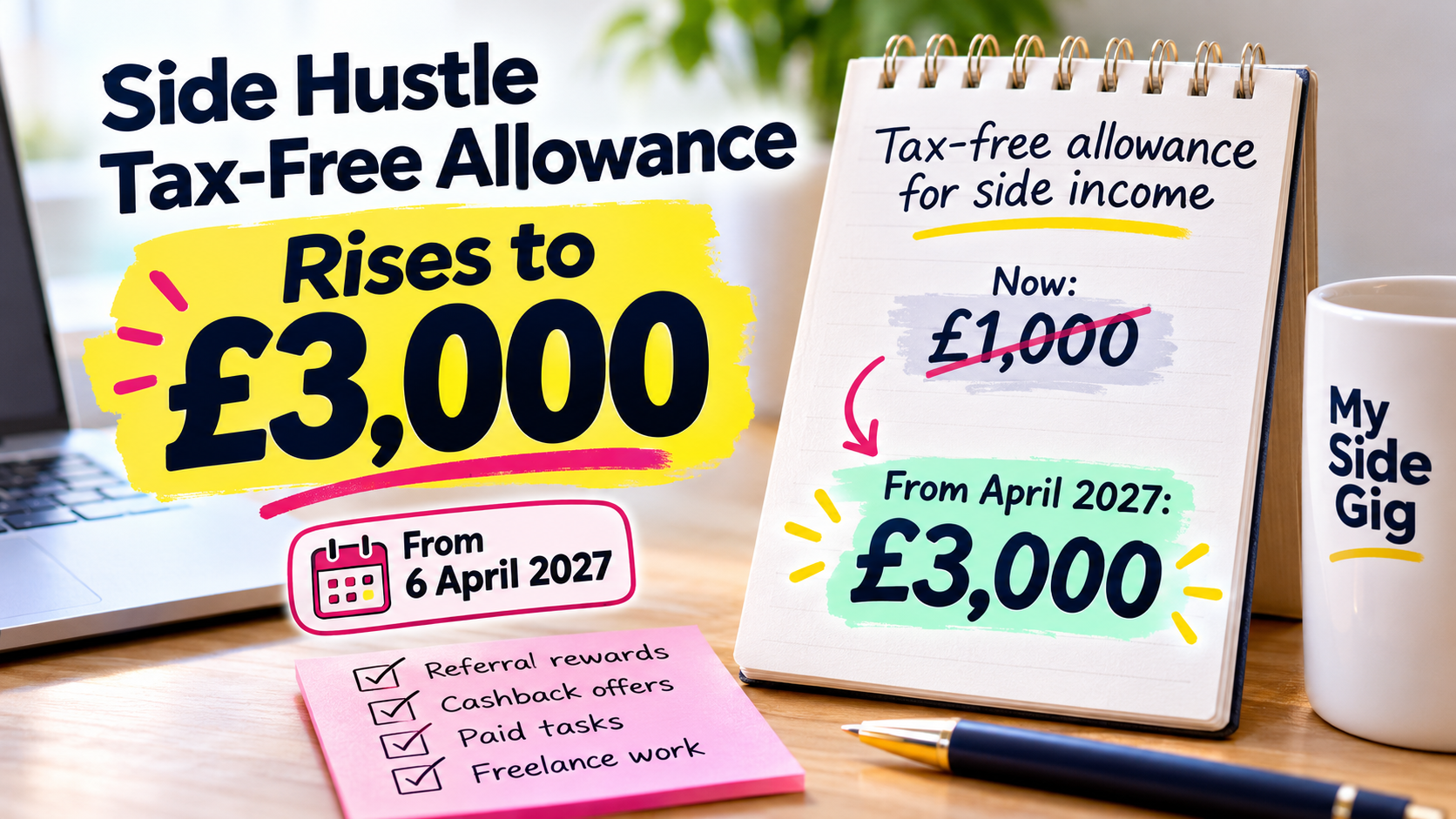
Good news for anyone earning a little extra money on the side! The UK government has announced that the tax-free trading allowance will increase from £1,000 to £3,000 a year from 6 April 2027.
The change, announced in the October 2026 Budget, means millions of people making money through side hustles could benefit from a much more generous tax-free allowance.
Whether you're earning money through referral schemes, online offers, selling items or doing occasional freelance work, this is a welcome development.
But there's an important distinction: not every reward or bonus you receive counts as taxable income in the first place.
Let's explain what's changing, which earnings count towards the allowance, and what it means for people using My Side Gig.
What's Changing With the £3,000 Side Hustle Allowance?
Currently, most people can earn up to £1,000 in qualifying trading or miscellaneous income each tax year without paying Income Tax on that income.
From 6 April 2027, the government plans to increase this allowance to £3,000.
| Current rules | From 6 April 2027 | |
|---|---|---|
| Tax-free trading allowance | £1,000 | £3,000 |
| General Self Assessment reporting threshold for trading income | £1,000 | £3,000 |
| Applies to | Qualifying trading and miscellaneous income | Same income categories |
| Tax year | 2026/27 | 2027/28 onwards |
This is a genuine increase in the amount of qualifying income you can earn tax-free, rather than simply a change to the paperwork required.
For example, somebody earning £2,500 a year from occasional freelance work could potentially have no Income Tax to pay on that income under the new rules, even if they already have a full-time job.
Important: The £3,000 limit applies to total qualifying gross income before expenses, across your relevant side hustles combined. It isn't a separate allowance for each activity.
When Does the £3,000 Allowance Start?
The new allowance is scheduled to begin on 6 April 2027, at the start of the 2027/28 tax year.
Until then, the existing £1,000 trading allowance continues to apply.
You cannot use the new £3,000 allowance against earnings from the current 2026/27 tax year.
Do You Pay Tax on Referral Bonuses?
This is particularly relevant to My Side Gig readers.
There are hundreds of referral programmes offering cash bonuses, gift cards, account credits and other rewards for signing up or inviting friends.
The good news is that many ordinary personal referral bonuses aren't taxable trading income.
For example, if you open a bank account, download an app or sign up for a service using somebody's referral link and receive a one-off promotional reward, that bonus will often fall outside the scope of Income Tax.
However, there is a difference between receiving a reward as an ordinary customer and regularly earning commissions by promoting companies.
Referral rewards that are generally not taxable
Examples may include:
- Receiving a £10 bonus for opening a new account.
- Getting £5 credit for joining an app through a friend's referral link.
- Receiving a promotional gift card for becoming a new customer.
- Earning ordinary consumer cashback on purchases.
These are generally customer incentives rather than payments for carrying out a trade.
Referral rewards that could be taxable
Things become more complicated if you're regularly promoting referral schemes to earn money.
For example, imagine somebody runs a website, social media page or organised referral activity that generates hundreds of pounds in commissions every month.
Those earnings could potentially be treated as trading or miscellaneous income, depending on the circumstances.
The same may apply to affiliate marketing, sponsored posts and payments received for promoting businesses.
The key point: Signing up through a referral link is generally different from running an organised money-making activity through referral commissions.
The £3,000 trading allowance could be particularly useful for people earning smaller amounts from taxable referral or affiliate activity.
Do You Pay Tax on Bank Switching Bonuses?
Bank switching is one of the most popular ways to make extra money in the UK.
Banks regularly offer cash incentives for switching your current account, sometimes worth £150, £175, £200 or more.
For ordinary personal current accounts, bank switching incentives are generally not subject to Income Tax.
They're usually treated as promotional incentives for becoming a customer, rather than earnings from employment or self-employment.
This means somebody could potentially earn several hundred pounds from personal bank switching offers without those bonuses using up their £3,000 trading allowance.
However, this doesn't automatically apply to every payment made by a bank. Interest, business-related incentives and certain other rewards may have different tax treatments.
What About Cashback, Free Money Offers and Sign-Up Bonuses?
Here at My Side Gig, we regularly feature opportunities to earn money by opening accounts, trying new apps, making purchases and completing promotional offers.
Many of these rewards are not taxable trading income, but the treatment depends on exactly what you're receiving and why.
Here's a general guide:
| Money-making activity | Typical tax treatment |
|---|---|
| Personal bank switching bonuses | Generally not taxable |
| Ordinary cashback on shopping | Generally not taxable |
| One-off sign-up bonuses | Often not taxable |
| Personal referral rewards | Often not taxable, depending on circumstances |
| Regular referral commissions | Potentially taxable |
| Affiliate marketing income | Generally taxable trading income |
| Paid surveys and market research | May be taxable miscellaneous or trading income |
| Freelance work | Generally taxable trading income |
| Selling your own unwanted belongings | Generally not taxable as trading income |
| Buying items specifically to resell for profit | Generally trading income |
The important thing is to look at the nature of the payment rather than simply assuming every reward counts as taxable income.
What Happens If You Earn More Than £3,000?
Earning more than £3,000 doesn't mean you suddenly pay tax on every penny you've earned.
If you qualify to use the trading allowance, you can generally deduct up to £3,000 from your relevant gross trading income when calculating your taxable profits.
For example:
- You earn £3,500 in qualifying trading income.
- You claim the £3,000 trading allowance.
- That leaves £500 potentially subject to Income Tax.
If you're already employed and earning above your Personal Allowance, that £500 would generally be taxed at your applicable Income Tax rate.
For someone paying the 20% basic rate, this could mean £100 in Income Tax.
You may alternatively be better off deducting your actual allowable business expenses rather than claiming the trading allowance, particularly if your expenses are substantial.
You cannot deduct actual expenses as well as the trading allowance against the same income.
National Insurance and other tax rules may also need considering, depending on your circumstances.
Why Is the Government Increasing the Allowance?
The government says the change is designed to support people earning relatively small amounts through side businesses and other trading activities.
Under the current rules, somebody making just over £1,000 in gross trading income can face additional tax administration, even if the amount they actually earn after expenses is relatively small.
Increasing the allowance to £3,000 should make things simpler.
According to HMRC's assessment:
- Up to 1.4 million people could benefit from the change.
- Approximately 400,000 people could see their tax bills reduced by an average of £380.
- Around 100,000 people may no longer need to report their trading income to HMRC.
The government also expects the changes to reduce administration for people running small businesses, freelancing or earning occasional income outside their main jobs.
It's effectively an attempt to make small-scale entrepreneurship more attractive while reducing the amount of tax paperwork people need to complete.
What Does This Mean for My Side Gig Readers?
We think this is a particularly positive change for people who enjoy earning extra money through online opportunities.
Many people using My Side Gig aren't trying to build a full-time business. They simply want to earn a few hundred pounds here and there to help with bills, holidays, Christmas or everyday spending.
Some of the opportunities we feature, such as personal bank switching bonuses and ordinary cashback, generally don't count as taxable trading income anyway.
Others, including certain paid tasks, affiliate earnings and organised referral activities, may fall within the trading allowance.
From April 2027, the increased £3,000 allowance will give eligible people considerably more room to earn qualifying side income before Income Tax becomes payable.
That's equivalent to £250 a month in qualifying gross trading income, compared with approximately £83 a month under the current allowance.
For someone earning £50, £100 or £200 a month from qualifying side activities, the new rules could make a meaningful difference.
Of course, it's still important to keep records and understand which earnings count towards the allowance.
But for many casual money-makers, this should make earning a little extra money considerably more straightforward.
Final Thoughts
The increase from £1,000 to £3,000 is welcome news for anyone who enjoys making extra money.
It provides more breathing room for people earning modest amounts from side hustles and could mean fewer people having to complete tax returns simply because they've earned a little extra cash.
For My Side Gig readers, it's also worth remembering that many everyday promotional rewards, including personal bank switching incentives and ordinary cashback, generally aren't taxable trading income anyway.
The combination of these existing rules and the increased allowance should make it easier for people to take advantage of legitimate money-making opportunities without unnecessary tax complications.
Want to start earning extra money? Check out our Free Money offers for the latest sign-up bonuses, referral rewards and money-making opportunities available in the UK.
Disclaimer: This article provides general information about UK tax rules and is not personal tax advice. Tax treatment depends on individual circumstances and the nature of the income received. The announced increase is subject to the relevant legislation taking effect. Check the latest HMRC guidance or speak to a qualified tax adviser if you're unsure.
Frequently asked questions
Can I earn £3,000 tax-free alongside my normal salary?
Yes. From April 2027, the trading allowance is expected to allow up to £3,000 of qualifying trading or miscellaneous income to be received tax-free, even if you already have a full-time job.
It is separate from your normal employment income, although the usual eligibility rules and exceptions apply.
Does the £3,000 allowance apply to bank switching bonuses?
Ordinary personal bank switching incentives are generally not taxable trading income, so they typically don't need to be included within the £3,000 allowance.
Are refer-a-friend bonuses taxable?
Many ordinary consumer referral rewards are not taxable. However, regularly earning commissions through organised promotional activity may create taxable income. It depends on the nature of the arrangement.
Is the £3,000 allowance per person?
Yes. It is an individual allowance, not a household allowance. However, each person has only one trading allowance covering their relevant qualifying activities combined.
Can I earn £3,000 from each side hustle?
No. The £3,000 allowance applies to your combined qualifying trading and miscellaneous income, not separately to every money-making activity.
Do I need to register as self-employed if I earn under £3,000?
From April 2027, people whose qualifying gross trading income is fully covered by the new allowance will generally not need to register for Self Assessment solely because of that income.
However, other circumstances may mean you still need to register, file a tax return or maintain records.
Does the new allowance apply now?
No. The increase is scheduled for 6 April 2027. The existing £1,000 allowance continues to apply during the 2026/27 tax year.